

With rapid developments in AI technology and increasing amounts of hyperbole surrounding AI, parents and children are struggling to make informed decisions about its use.Although generative AI models like ChatGPT have recently popularized the concept, AI has invisibly powered many technologies in everyday life for years. In a 2022 survey, 44% of adults thought they did not regularly interact with AI. While kids have a better general understanding of AI, 72% of 9-17 year olds expressed a desire for guidance in using different AI tools.
Using the principles of media literacy, an interactive experience can be crafted to introduce families to basic elements of AI in tandem with the issues that arise from them, preparing families to engage with an AI-powered world critically.
Think Outside the Box had an extended development process, beginning as a research paper which was brought to life in an exhibition reflecting that research.
The project’s concept was narrowed from general media literacy education for youth to a specific focus on AI literacy. Research found that there were enormous gaps in the AI literacy materials available to kids and their parents. Very few resources teach critical thinking skills relating to AI usage, with most available materials skewed towards uncritical AI positivity and neglecting to discuss AI’s ethical implications. Furthermore, many digital literacy resources are exclusively targeted towards the school system, which cannot update its curriculum at the speed of technological innovation.
While initial planning was geared towards the development of a book or graphic novel, further research revealing the importance of interactivity in learning about AI led to the development of a museum exhibition.
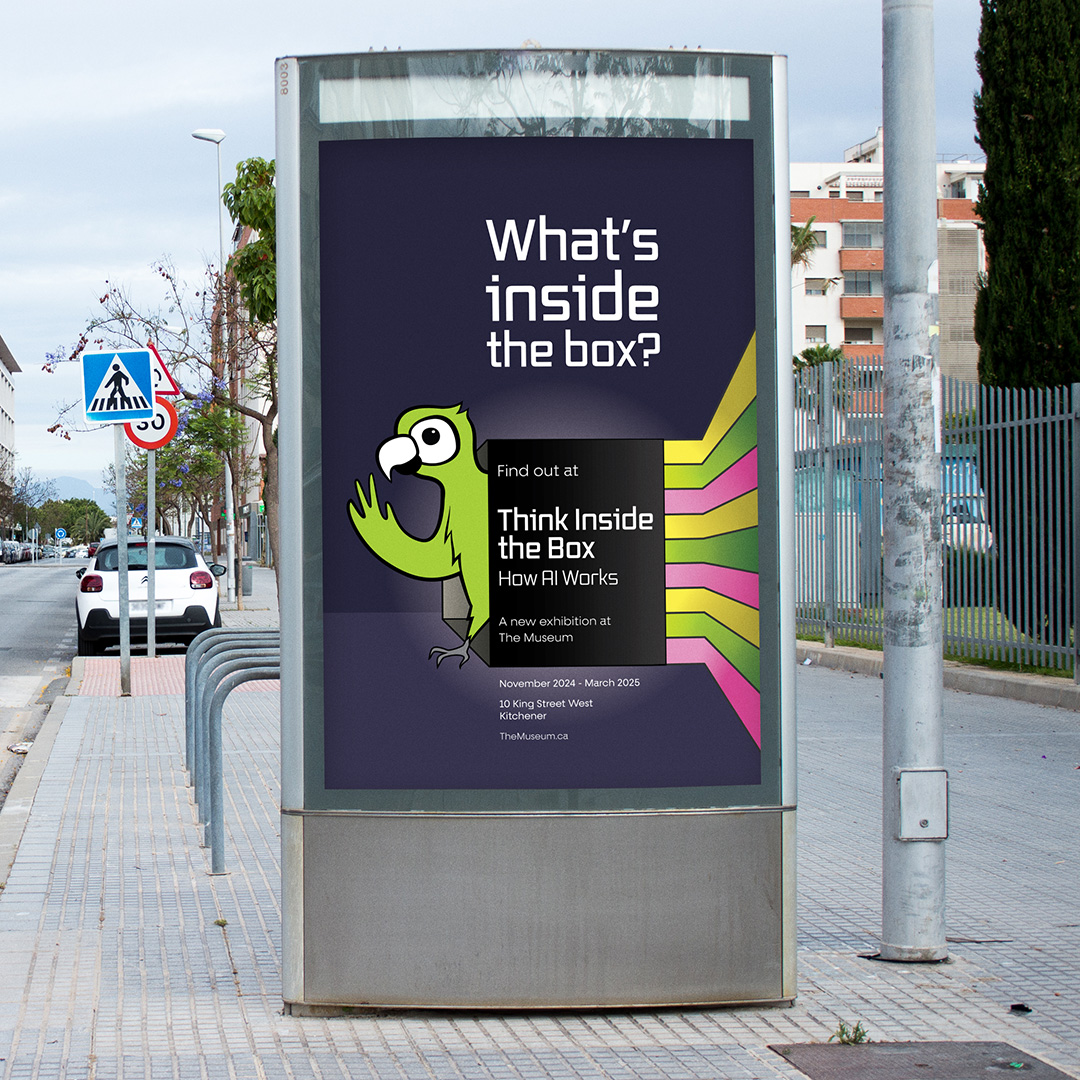
The visual identity for Think Outside the Box expresses the exhibition’s technological nature while remaining bright, fun, and accessible. The exhibit’s bright colours and cartoony visuals contrast with the typical design language surrounding AI and technology, which tends to emphasize its complexity and mystique through heavy blues and blacks and complicated visuals of electronics.

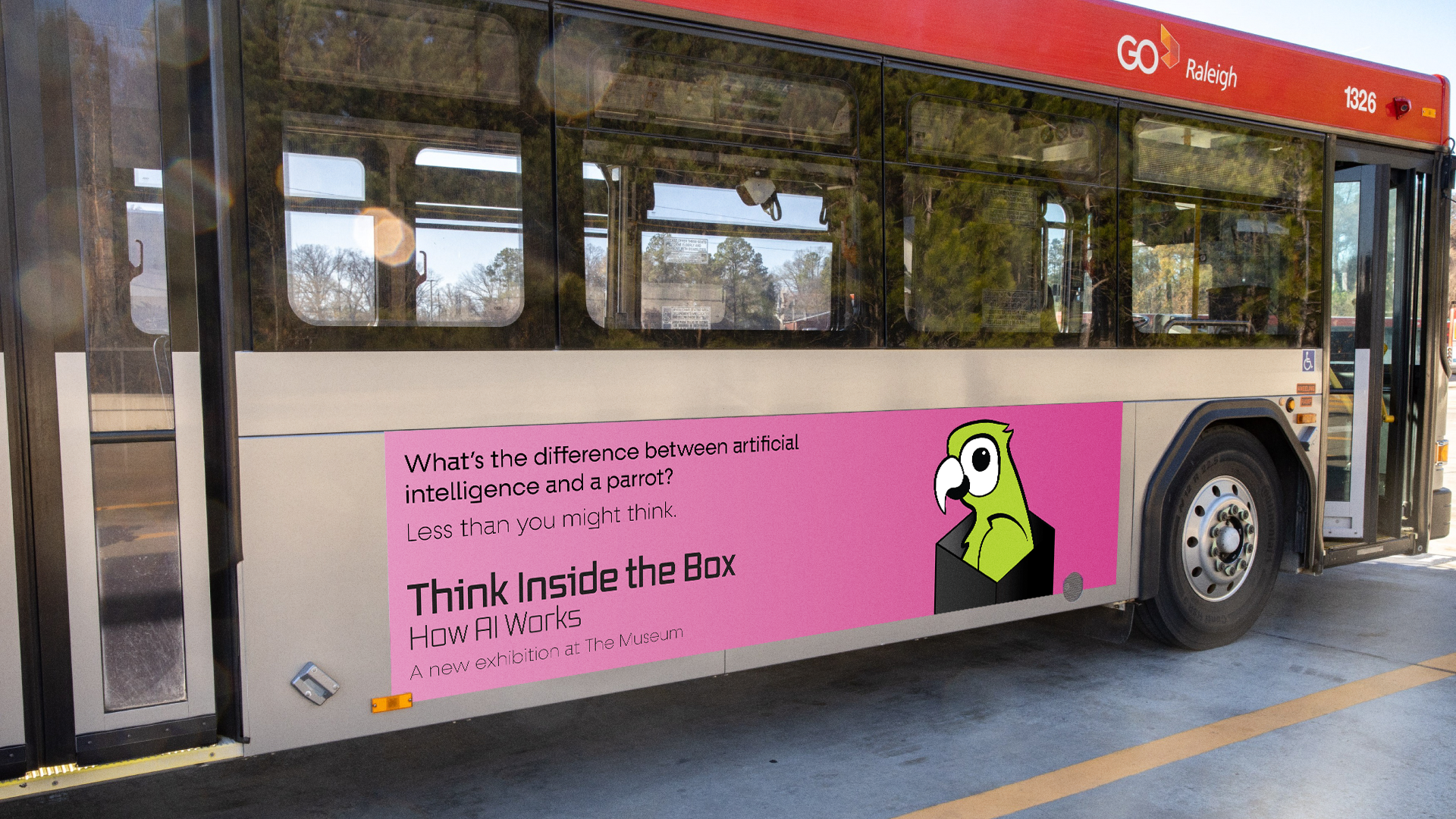
The logo is a parrot inside a black box—two recurring symbols in AI discourse. The black box refers to the complexity and lack of transparency in how large AI models process information, making it difficult to observe or understand. The parrot is a symbol used by AI ethicists (link to Stochastic Parrots) to refer to large language models like ChatGPT, which mimic human language with no real understanding of its meaning, much like parrots. Additionally, the parrot serves as a cute mascot for the exhibit, boosting its appeal to children. The exhibit is titled “Think Inside the Box” as an invitation for visitors to reflect on a technology which may seem inaccessible through gaining an understanding of its inner workings.
The most important part of designing an exhibition is, of course, the exhibition itself. The exhibition was considered as a 3D narrative environment presenting an argument that visitors can move through and interact with. Mundane objects were chosen to represent AI concepts to make the topics approachable and relatable. Initially, the entire exhibition space was to take the form of a living room housing these objects. Ultimately a linear path was plotted through a space representing a black box to encourage visitors to engage with the stations sequentially and to allow for sonic isolation of stations with noises.
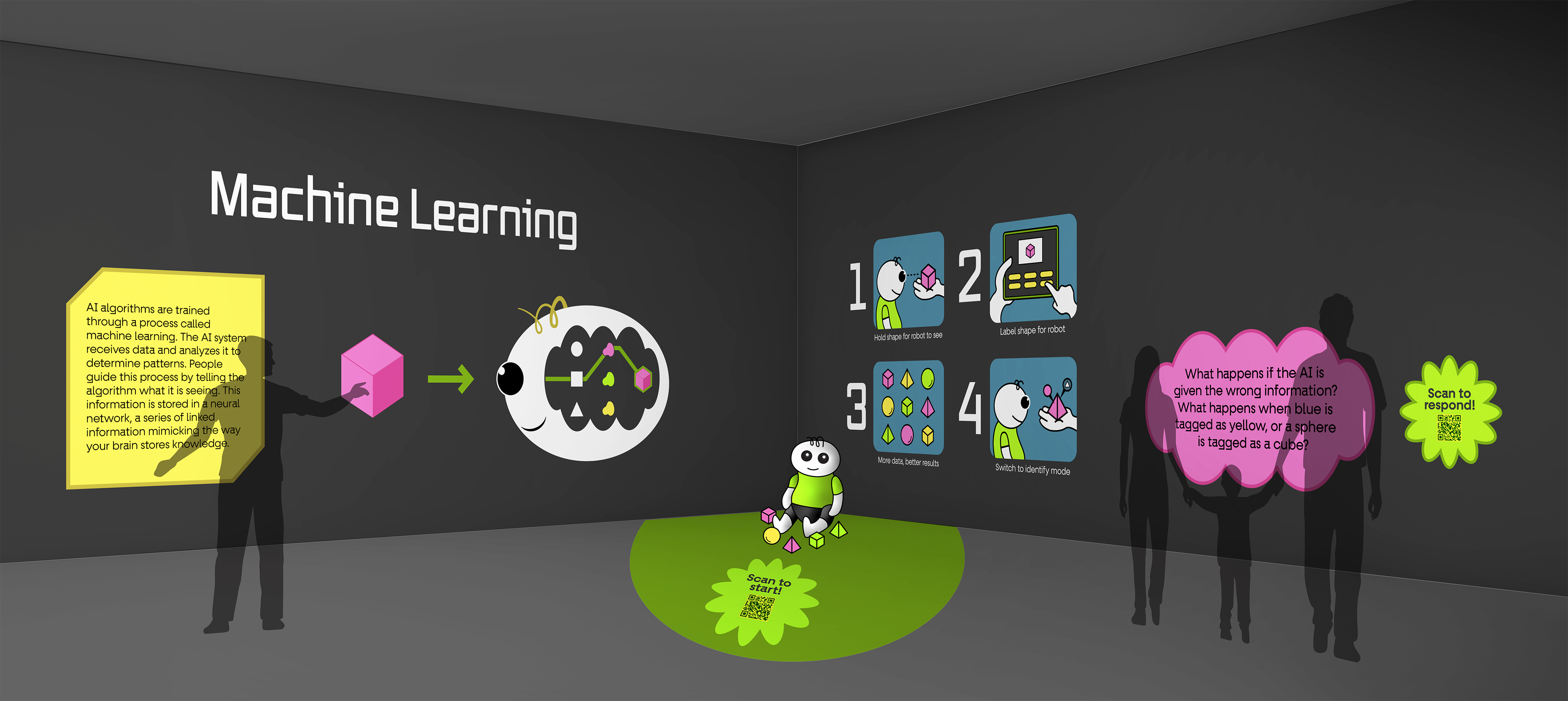
As visitors enter the station, wall text housed within the exhibition’s cube motif explains the area’s central concept. On the other end of the station, there’s a question for reflection with a QR code giving visitors the opportunity to respond online.
The robot baby is positioned in the corner of the room with shapes around it. Behind the robot are instructional wall graphics providing a basic overview of the interaction. A QR code on the ground takes the visitors to the web component which allows them to train the robot to recognize shapes and colours.
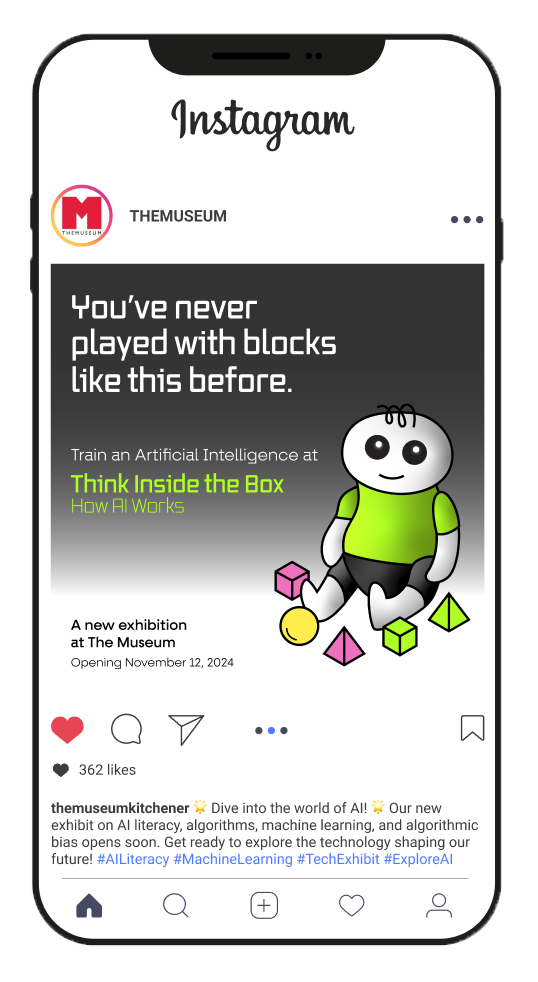
The section for Station 2 guides visitors through the basic machine learning process. The robot baby has cameras in its eyes, which visitors can view a live feed of through the website. By positioning shapes in front of the robot, taking photos, and tagging those photos with the relevant information, users can train the robot’s AI system to recognize shapes and colours.
Visitors are encouraged to create a sufficient amount of data before analyzing shapes. On conclusion of the activity, they are provided with an opportunity for reflection on how inaccurate data could shape an AI.
Check out the interactive prototype to the right!

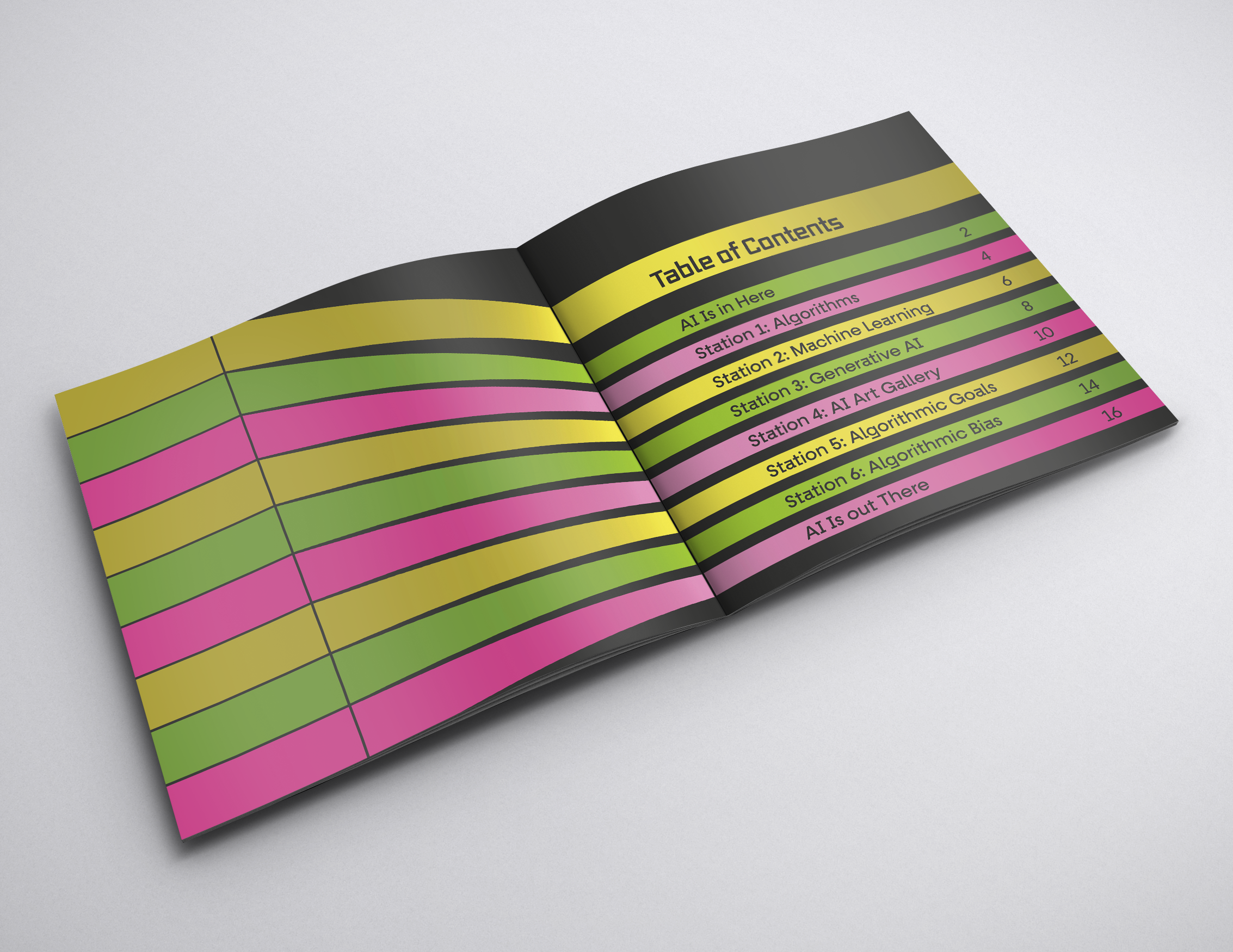
The catalogue serves as a memento of the exhibition, printed on square-shaped pages to continue the box motif. The coloured lines on the cover represent the way AI is connected to so many facets of our lives, and continue across the page boundary and into the table of contents spread, inviting readers to continue.
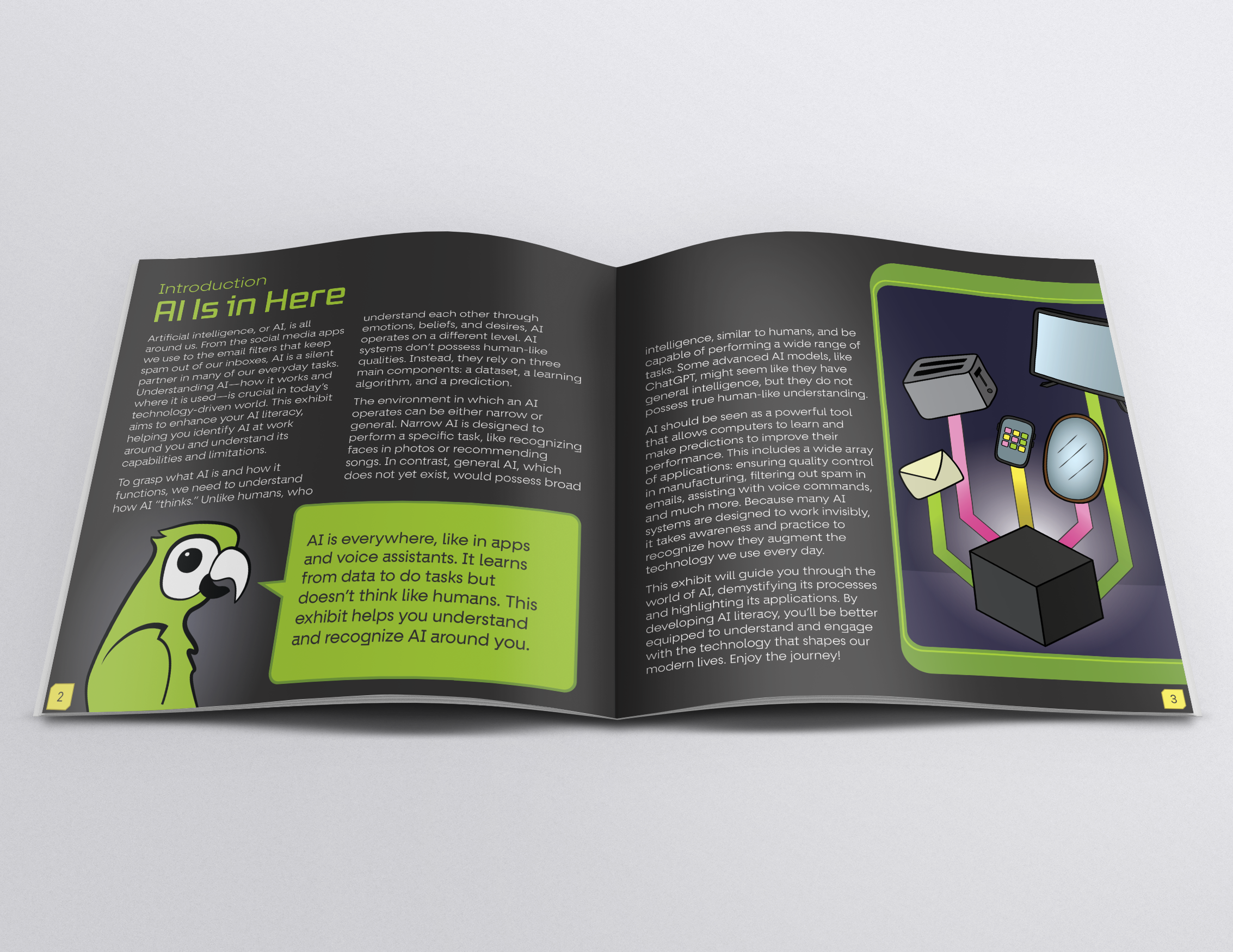
The catalogue reproduces the wall graphics and text from each station of the exhibition, expanding on them to provide further understanding. The parrot is used in each section to provide a child’s-level summary of the absolute basics of each concept.
The marketing campaign for the exhibition playfully asks questions and provokes curiosity. A poster and ad campaign in buses and bus stops targets the general public, particularly students and lower income parents who commute via public transit. Promoted Instagram advertisements target Millennial parents, likely to be the decision maker in family visits to the exhibition.

Send a telegram to our underground laboratory and we’ll begin running tests at our earliest convenience.